Opening Reception for the Artist Thursday, September 10, 6-8:30 pm
September 10 — October 10, 2026
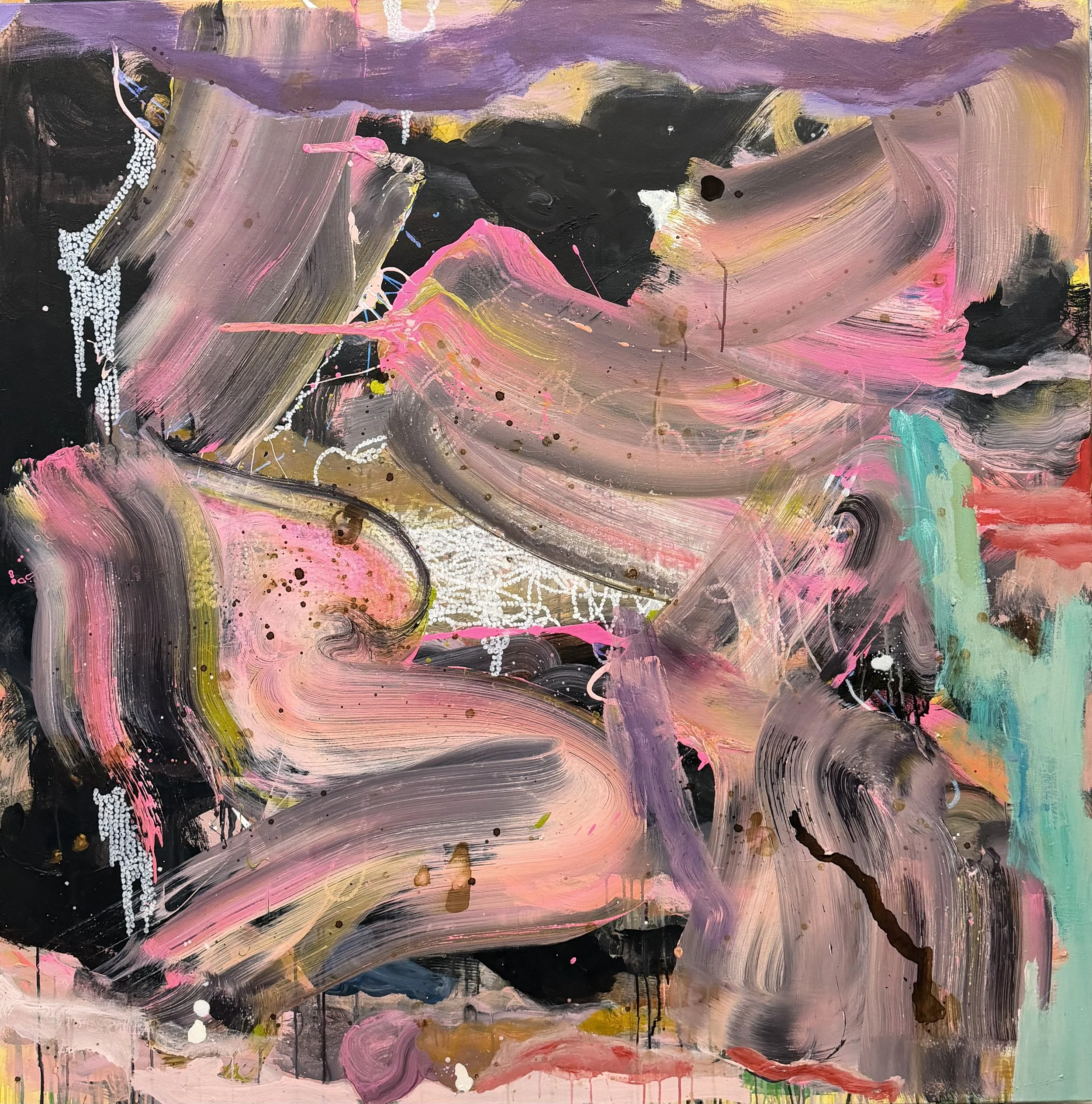
After Icarus is a solo exhibition by Marielle Plaisir at Fredric Snitzer Gallery that takes The Fall of Icarus as a framework for considering the contemporary world. Rather than focusing on Icarus as an individual mythological figure, Plaisir approaches the fall as a systemic condition—one in which certain bodies, histories, and experiences disappear from view while the world continues uninterrupted.
In the painting attributed to Pieter Bruegel the Elder, Icarus is almost invisible. The farmer continues to plow, the ship sails on, and the landscape remains luminous and indifferent. This absence of attention becomes central to Plaisir’s work. Across the series, Icarus becomes a collective and fragmented body, representing those who fall outside dominant narratives and whose disappearance leaves the established order largely unchanged.
The paintings and drawings move between presence and absence. Bodies appear fragmented, displaced, running, floating, or seemingly taking flight. It remains deliberately unclear whether they are falling, escaping, or reaching upward. Landscapes become silent witnesses, holding traces of vanished bodies and histories that resist disappearance. The uncertainty of these gestures suggests that the fall is not necessarily an ending: to fall can also mean moving, transforming, resisting, or finding another way of being seen.
Beauty is equally central to the work. Drawing from her Caribbean, Guadeloupean history and French cultural heritage, Plaisir considers the complicated relationship between beauty and power. Textiles, gardens, architecture, fashion, and decorative traditions have historically produced beauty alongside systems of domination and erasure. In After Icarus, she reclaims these visual languages, turning beauty into both seduction and resistance.
Ultimately, After Icarus asks what it means to remain visible in a world accustomed to looking elsewhere. If Bruegel’s Icarus disappears beneath the surface while life continues around him, Plaisir reverses this logic: her fragmented figures insist on being seen. They do not simply represent the fall; they occupy its aftermath, carrying memory, history, and possibility forward. In this sense, After Icarus is not a meditation on disappearance alone, but on the persistence of the body—and its capacity to reemerge, reclaim space, and imagine another future.
About Marielle Plaisir Marielle Plaisir (French and Guadeloupean, born in Le Havre, France; lives and works in Miami, FL) is a multidisciplinary artist whose practice encompasses painting, drawing, sculpture, installation, textiles, film, and performance. Rooted in both Caribbean and European histories, her work examines how systems of power, domination, race, class, and social inequality continue to shape contemporary society and human relationships. Drawing from historical research, literature, and lived experience, Plaisir brings past and present into dialogue, revealing how inherited structures and narratives persist, transform, and reappear in the world today.
Beauty plays a central role in her practice—not simply as an aesthetic language, but as a means of questioning, disrupting, and reclaiming representations historically associated with power. Through richly layered figurative and symbolic worlds, she creates spaces in which critique coexists with imagination, resilience, and the possibility of alternative futures. Her work has been exhibited internationally in museums, institutions, biennials, and art fairs across the United States, Europe, the Caribbean, Africa, and Latin America. Plaisir’s works are held in museum and institutional collections across the United States, Europe, and the Caribbean.